


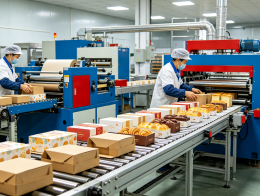
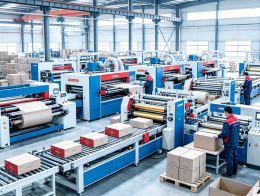
 Adapt to packaging factories and ecommerce supporting carton processing factories.
The conveyor belt is one of the fastest-wearing components on a folder gluer machine, and how long it lasts has a direct effect on how often a production line needs to stop for maintenance. What is often overlooked is that belt wear is not simply a function of total running hours. In most cases, it comes down to how pressure is applied during operation, how the drive system handles changes in speed, and what material the belt itself is made from.
Two issues tend to explain why conveyor belts on folder gluer machines wear out earlier than expected.
The first is fixed, non-adjustable pressure control. Many traditional conveyor systems use a pressing structure with a single fixed setting, regardless of the thickness of the cardboard or the type of paper being processed. When a belt is repeatedly run under pressure that does not match the material passing through it, certain sections of the belt absorb more stress than others. Over time, this uneven loading shows up as localized wear, surface glazing, or slipping, and the belt reaches the end of its usable life well before it should, simply because the pressure applied never matched the job.
The second issue is a limited range of drive and operating modes. Some conveyor systems only support a single mode of operation — either fully manual or fully automatic — with no flexibility to match the actual pace of a production run. When a belt is forced to operate outside its ideal rhythm, it experiences repeated stretching and sudden loading during starts, stops, and speed changes that would not occur under a more adaptable drive setup. This kind of repeated mechanical stress accelerates material fatigue, and over enough production cycles, it becomes a meaningful contributor to premature belt replacement.
Belt material itself also plays a role that is easy to underestimate. Lower-grade synthetic materials tend to crack, stretch, or lose tension more quickly under sustained friction and load, which means that even with good pressure control, a belt built from weaker material will still wear out faster than one built to handle continuous industrial use. This is a background factor worth keeping in mind, though the more immediate and controllable causes of premature wear tend to be pressure mismatch and drive inflexibility.
Rather than treating conveyor belt replacement as a routine, unavoidable cost, we approach belt longevity as something that can be meaningfully influenced through drive design, pressure control, and material selection. Two areas of our equipment are especially relevant here.
The first is our motor-driven conveyor section, which supports both manual and automatic follow-up operation modes, allowing the belt's operating rhythm to be matched to actual production needs rather than forced into a single fixed pattern. The upper conveying pressure section is also motor-driven and can be moved forward or backward to adjust its position, with an optional cylinder pressure regulation system available to fine-tune pressing force based on case thickness. This means the belt is not subjected to a single pressure setting regardless of what material is running through the machine — pressure can be adjusted to match the job, which reduces the kind of concentrated, repetitive stress that leads to localized wear over time.
The second area is belt material. Our machine head belt uses a cowhide band material, which offers noticeably better toughness and wear resistance compared with standard synthetic belting. Combined with a stable supply of conveyor belting sourced through established Shenzhen manufacturing channels, this material choice holds its tension and resists deformation more consistently across long periods of high-speed operation. A belt that maintains its shape and tension under sustained use is less prone to the kind of gradual slippage and surface degradation that shortens service life on lower-quality alternatives.
These two systems are supported by the machine's broader control architecture, including a Delta PLC and SINEE frequency converter, which help keep running speed and transitions between operating states smooth and predictable. A conveyor system that avoids abrupt speed changes places noticeably less mechanical stress on the belt over the course of a shift, even though this part of the system does not interact with the belt directly.
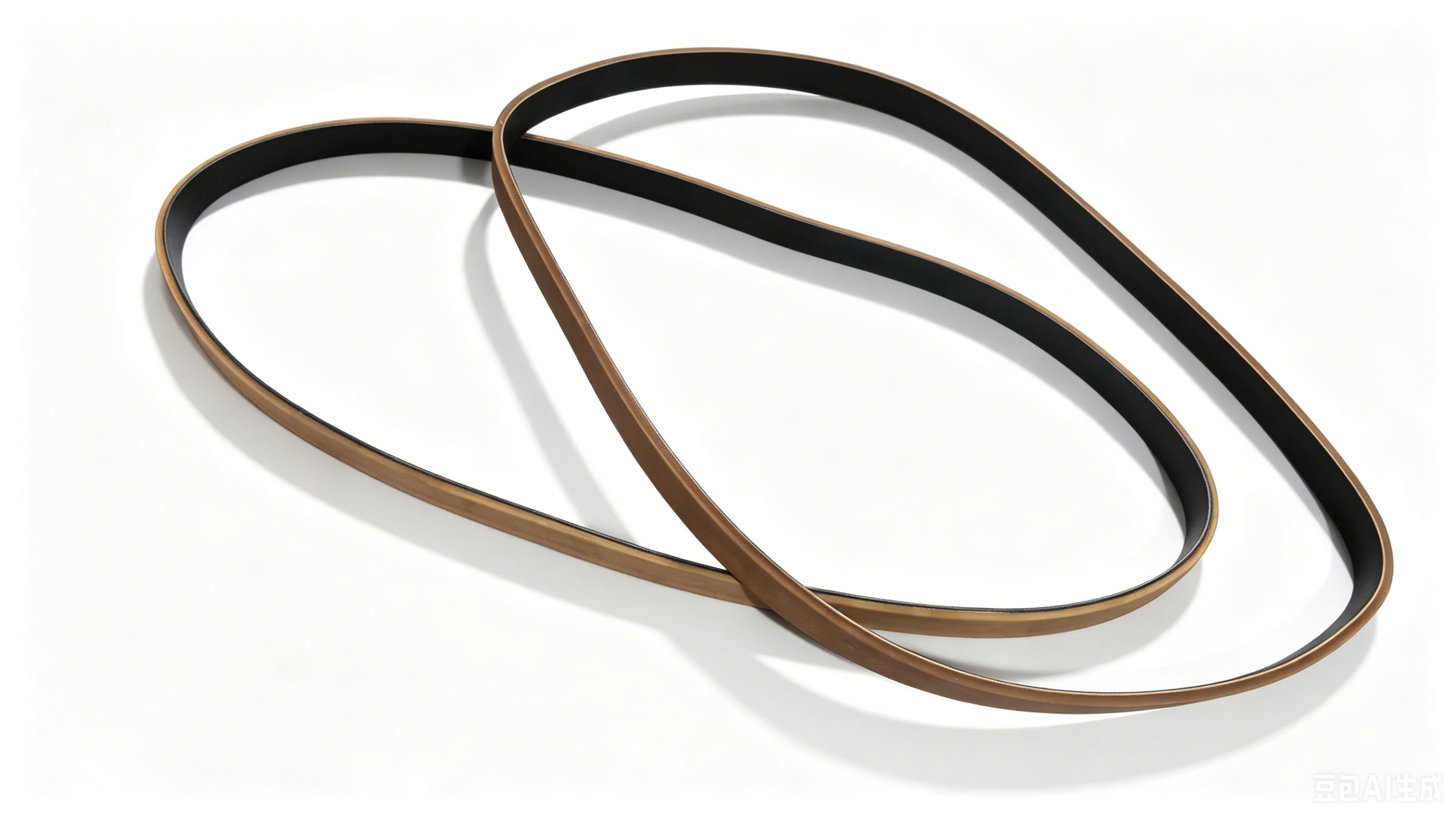
None of this is about making a conveyor belt last forever — every belt is a wear component, and normal use will eventually require replacement regardless of how well a machine is designed. What adjustable pressure control and durable belt material actually achieve is a longer, more predictable service interval, which matters more in practice than a single replacement being avoided.
For a production facility, the value of a longer belt life is not just the cost of the belt itself. Each unplanned belt replacement means a production stoppage, a maintenance intervention, and often a disruption to a scheduled run. When pressure settings are matched to the material being processed, and the belt material itself is built to hold up under continuous friction and tension, the interval between replacements becomes longer and more consistent, which makes maintenance planning considerably easier. A facility that can anticipate belt replacement as part of a planned maintenance cycle, rather than reacting to an unexpected failure mid-run, is in a stronger position to protect overall equipment uptime.
This is also where component-level engineering choices connect back to a larger point about equipment value. A conveyor system built with adjustable pressure and durable materials costs more to design and manufacture than one built around a single fixed setting and standard belting, but the return shows up over the machine's operating life in the form of fewer stoppages, lower replacement frequency, and more predictable maintenance budgeting.
Conveyor belt life on a folder gluer machine comes down to a combination of how pressure is applied, how flexibly the drive system responds to actual production conditions, and what material the belt itself is made from. Each of these factors is a design decision, not an inevitability, which means belt longevity is something a manufacturer can meaningfully influence at the engineering stage rather than something a production team simply has to accept as a fixed cost of operation.
As a manufacturer, we build our conveyor systems around this understanding — from motor-driven pressure adjustment and optional cylinder-based regulation to the selection of cowhide band material for the machine head belt. For packaging producers evaluating folder gluer equipment, conveyor belt design is worth examining closely during the selection process, since it has a direct and ongoing effect on maintenance frequency and production uptime. We work with businesses to configure conveyor systems suited to their specific paper types and production volumes, drawing on our experience in corrugated box folder gluer design to help keep production lines running with fewer interruptions over the long term.
'%3e%3cg%20id='Group%201315'%3e%3cg%20id='Group'%20opacity='0.5'%3e%3cpath%20id='Vector'%20d='M387.997%200L232.635%20265.605L58.6579%2086.8843L285.379%200H387.997Z'%20fill='url(%23paint0_linear_821_1490)'/%3e%3c/g%3e%3cg%20id='Group_2'%20opacity='0.5'%3e%3cg%20id='Group%201314'%3e%3cpath%20id='Vector_2'%20d='M376.103%2012.2625L298.38%20330L10.1988%20240.481L298.38%2012.2625H376.103Z'%20fill='url(%23paint1_linear_821_1490)'/%3e%3c/g%3e%3c/g%3e%3c/g%3e%3c/g%3e%3c/g%3e%3cdefs%3e%3clinearGradient%20id='paint0_linear_821_1490'%20x1='319.349'%20y1='11.6627'%20x2='157.133'%20y2='145.876'%20gradientUnits='userSpaceOnUse'%3e%3cstop%20stop-color='%23D2DFFF'/%3e%3cstop%20offset='1'%20stop-color='%23D2DFFF'%20stop-opacity='0.01'/%3e%3c/linearGradient%3e%3clinearGradient%20id='paint1_linear_821_1490'%20x1='253.685'%20y1='25.1395'%20x2='74.5789'%20y2='173.327'%20gradientUnits='userSpaceOnUse'%3e%3cstop%20stop-color='%23D2DFFF'/%3e%3cstop%20offset='1'%20stop-color='%23D2DFFF'%20stop-opacity='0.01'/%3e%3c/linearGradient%3e%3c/defs%3e%3c/svg%3e)
'/%3e%3cpath%20id='Rectangle%20455'%20d='M0%2012H6L24%2056H0V12Z'%20fill='%23CE221D'/%3e%3c/g%3e%3cdefs%3e%3clinearGradient%20id='paint0_linear_769_2773'%20x1='0'%20y1='28'%20x2='432.5'%20y2='28'%20gradientUnits='userSpaceOnUse'%3e%3cstop%20stop-color='%23153B8A'/%3e%3cstop%20offset='1'%20stop-color='%23153B8A'%20stop-opacity='0'/%3e%3c/linearGradient%3e%3c/defs%3e%3c/svg%3e) Adapt to packaging factories and ecommerce supporting carton processing factories.
Adapt to packaging factories and ecommerce supporting carton processing factories.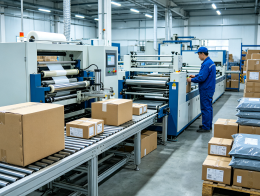 The printing and packaging factory produces molded paper boxes.
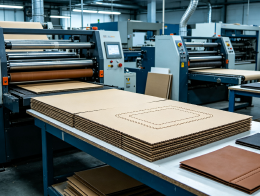 Production of two-piece packaging boxes for large household appliances with butt joint bonding.
 Pre-apply double-sided tape to the packaging of electronic products.
 Automatic Carton Forming Technology
 Double-sided tape applicator
Two-layer systems are designed for operational efficiency and ease of use. With automated synchronization and reduced ...
Each carton factory has different carton sizes, cardboard types, output capacity and workshop conditions. Please fill in the left form with your detailed production demands. Our technical team will tailor the most suitable machine configuration and professional production solution for you, providing free one-on-one technical guidance and customized support.