


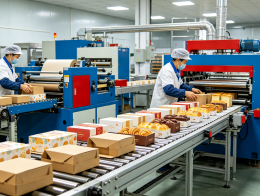
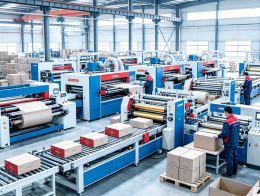
 Adapt to packaging factories and ecommerce supporting carton processing factories.
Unusual noise coming from a corrugated box folder gluer machine is one of the most common signals that something on the production line needs attention. In most cases, the sound itself is not the actual problem — it is a symptom pointing to wear, misalignment, or a design weakness somewhere in the machine's moving parts. For packaging manufacturers running high-volume production, understanding what these noises mean, and why they happen, is the first step toward reducing downtime and extending equipment life.
Excessive noise rarely appears overnight. It tends to build gradually as components wear, tolerances shift, or vibration accumulates across the machine frame. Two sources are particularly common on folder gluer equipment.
The first is bearing and linear guide rail wear. When bearings or guide rails are made from lower-grade materials, or when the clearance between moving parts is not tightly controlled during assembly, friction noise appears early in the machine's service life. As running hours accumulate, this friction tends to worsen, and the noise is often accompanied by a gradual drop in folding and gluing precision. In other words, the sound is frequently the earliest warning sign of declining accuracy, long before defective boxes start coming off the line.
The second common source is the splicing section, where paper sheets are pressed and joined together at high speed. On machines with basic mechanical designs, this contact point often relies on hard metal-to-metal or metal-to-cardboard pressing, which produces sharp impact noise with every cycle. Beyond the noise itself, this kind of repeated hard contact accelerates wear on the pressing components and increases the frequency of maintenance interruptions over time.
A third, less obvious factor is frame rigidity. If the machine's structural panels are not built to withstand the vibration generated by continuous high-speed operation, that vibration can resonate through the frame rather than being absorbed, making noise from otherwise minor sources sound considerably louder than it should. This is why two machines with similar components can still sound noticeably different on the shop floor — the difference often comes down to how well the frame itself is engineered to absorb rather than transmit vibration.
Beyond these mechanical sources, noise can also stem from something as simple as inconsistent paper feeding or misaligned adjustment settings, which cause components to work against slightly resistant material rather than moving freely. This type of noise is usually intermittent rather than constant, and it tends to change when paper thickness, box size, or feeding speed is adjusted — which is a useful clue for narrowing down whether an issue is mechanical wear or an operating parameter that needs recalibration.
Addressing noise at the design and component level tends to be more effective, and more durable, than trying to dampen it afterward with covers or enclosures. Two areas of our machine design are worth highlighting here, because they respond directly to the causes described above.
Our splicing section uses steel balls to press the cardboard sheets together, and each steel ball is coated with a plastic layer rather than left as bare metal. This detail matters more than it might seem — the plastic coating cushions the point of contact, reducing the hard impact sound that occurs when metal presses directly against paper or against another metal surface. We pair this with a photoelectric sensing device that times the splicing action precisely, which helps avoid the extra noise and wear that comes from mistimed or repeated pressing cycles. The result is a splicing process that stays mechanically consistent without relying on brute-force contact.
The second area is component selection for the drive and guidance system. We use NSK and HRB bearings along with HIWIN and Shangyin linear guide rails, paired with a Delta PLC and SINEE frequency converter to keep motion control precise. Tighter manufacturing tolerances on these components mean less internal clearance, which in turn means less friction noise during operation, even as running hours accumulate. This is combined with a WECON human-machine interface for adjustment and monitoring, along with Omron relays and Schneider contactors in the electrical system, all of which are chosen for consistency rather than for meeting a minimum specification.
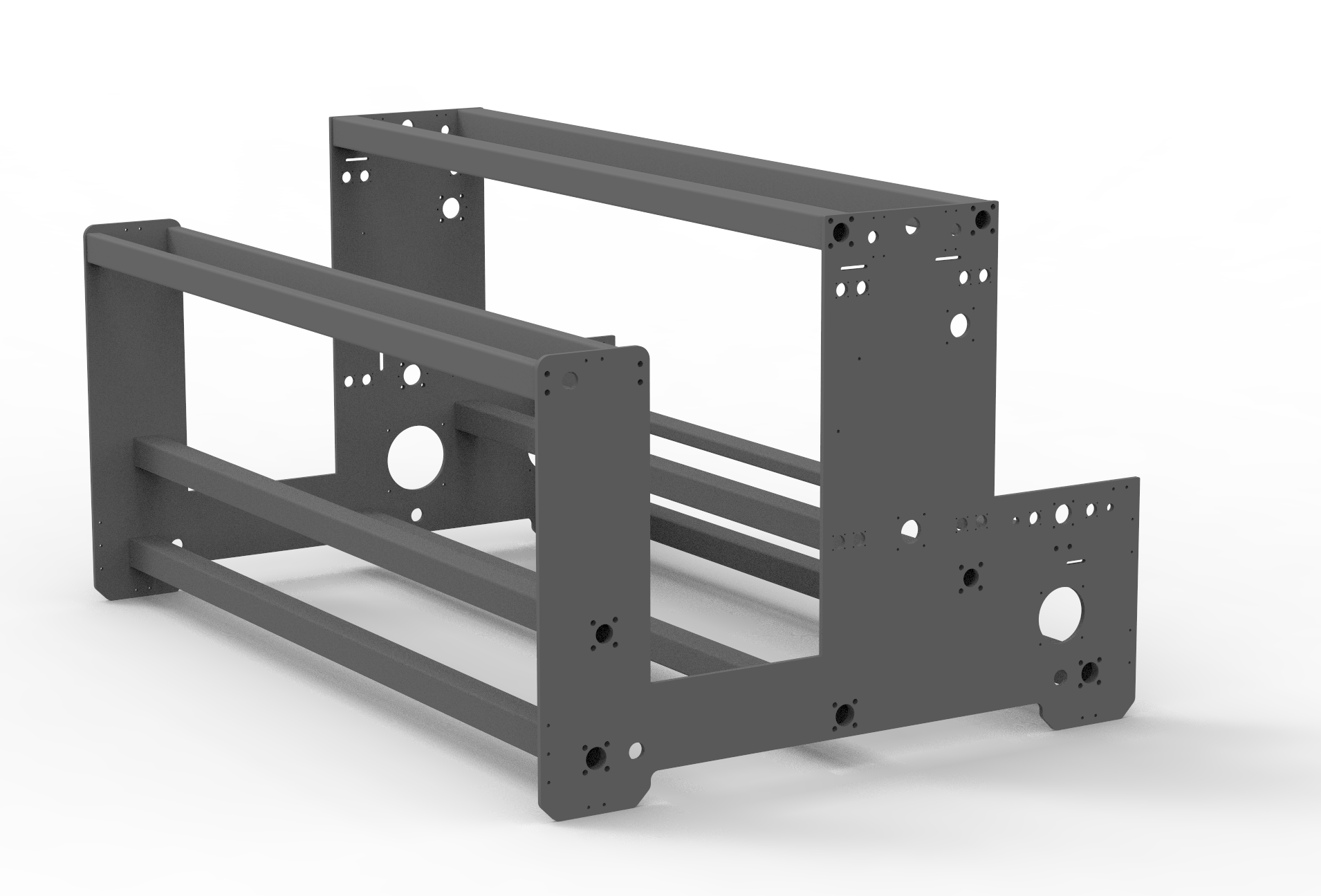
Frame construction plays a supporting role as well. Our machine wall panels are built from 16mm steel that goes through a cold and heat treatment process meeting international standards. This gives the frame the rigidity needed to resist vibration under continuous operation, so that noise from any individual component is not amplified by a frame that flexes or resonates under load. When paired with servo-driven sections for gluing and folding, the overall motion profile also stays smoother, which reduces the sudden starts and stops that are a common source of mechanical noise on less refined equipment.
None of these details are meant to eliminate noise entirely — any high-speed mechanical process will produce some operating sound, and claims to the contrary are not realistic. What matters is whether that noise stays consistent and predictable over time, or whether it grows louder as a sign of accelerating wear. A folder gluer built with cushioned splicing contact, precision-matched bearings and guide rails, and a rigid frame tends to hold its noise profile steady across a much longer service interval, which is a more useful benchmark for a production manager than a one-time "quiet operation" claim.
This connection between noise and reliability is also why noise diagnosis is worth taking seriously on the shop floor. A gradual increase in operating sound, particularly around the bearing housings, guide rails, or splicing section, is often detectable well before it shows up as a measurable drop in output quality. Tracking that change over time — rather than waiting for a visible defect — gives maintenance teams a practical early-warning tool, and it is one of the reasons component quality at the design stage matters as much as routine maintenance afterward.
For maintenance teams, a practical approach is to note where the noise is loudest and whether it changes with speed, load, or paper type, since this narrows down whether the cause lies in the bearings, the splicing section, or an adjustment setting rather than requiring a full inspection every time. Keeping a simple record of when unusual sound first appears, and how it develops over subsequent production runs, also makes it much easier to plan maintenance proactively rather than reacting only after a component fails.
Noise in a corrugated box folder gluer machine is ultimately a reflection of how precisely it was engineered and assembled. The quality of the bearings, the tightness of the guide rail tolerances, the design of the splicing contact points, and the rigidity of the frame all combine to determine how a machine sounds — and behaves — after months of continuous operation, not just on the day it leaves the factory.
As a manufacturer, we approach noise reduction as a structural design question rather than an afterthought. From the plastic-coated steel ball splicing mechanism to the selection of industrial-grade bearings, guide rails, and drive components, every choice is made with long-term running stability in mind. For packaging producers evaluating folder gluer equipment, operating noise is a practical indicator worth paying attention to during machine selection, not just during troubleshooting. We work with businesses to match the right configuration to their production requirements, drawing on our experience in corrugated box folder gluer design to help keep production lines running smoothly, quietly, and reliably over the long term.
'%3e%3cg%20id='Group%201315'%3e%3cg%20id='Group'%20opacity='0.5'%3e%3cpath%20id='Vector'%20d='M387.997%200L232.635%20265.605L58.6579%2086.8843L285.379%200H387.997Z'%20fill='url(%23paint0_linear_821_1490)'/%3e%3c/g%3e%3cg%20id='Group_2'%20opacity='0.5'%3e%3cg%20id='Group%201314'%3e%3cpath%20id='Vector_2'%20d='M376.103%2012.2625L298.38%20330L10.1988%20240.481L298.38%2012.2625H376.103Z'%20fill='url(%23paint1_linear_821_1490)'/%3e%3c/g%3e%3c/g%3e%3c/g%3e%3c/g%3e%3c/g%3e%3cdefs%3e%3clinearGradient%20id='paint0_linear_821_1490'%20x1='319.349'%20y1='11.6627'%20x2='157.133'%20y2='145.876'%20gradientUnits='userSpaceOnUse'%3e%3cstop%20stop-color='%23D2DFFF'/%3e%3cstop%20offset='1'%20stop-color='%23D2DFFF'%20stop-opacity='0.01'/%3e%3c/linearGradient%3e%3clinearGradient%20id='paint1_linear_821_1490'%20x1='253.685'%20y1='25.1395'%20x2='74.5789'%20y2='173.327'%20gradientUnits='userSpaceOnUse'%3e%3cstop%20stop-color='%23D2DFFF'/%3e%3cstop%20offset='1'%20stop-color='%23D2DFFF'%20stop-opacity='0.01'/%3e%3c/linearGradient%3e%3c/defs%3e%3c/svg%3e)
'/%3e%3cpath%20id='Rectangle%20455'%20d='M0%2012H6L24%2056H0V12Z'%20fill='%23CE221D'/%3e%3c/g%3e%3cdefs%3e%3clinearGradient%20id='paint0_linear_769_2773'%20x1='0'%20y1='28'%20x2='432.5'%20y2='28'%20gradientUnits='userSpaceOnUse'%3e%3cstop%20stop-color='%23153B8A'/%3e%3cstop%20offset='1'%20stop-color='%23153B8A'%20stop-opacity='0'/%3e%3c/linearGradient%3e%3c/defs%3e%3c/svg%3e) Adapt to packaging factories and ecommerce supporting carton processing factories.
Adapt to packaging factories and ecommerce supporting carton processing factories.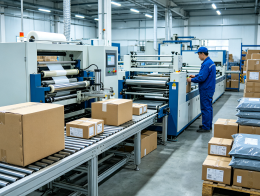 The printing and packaging factory produces molded paper boxes.
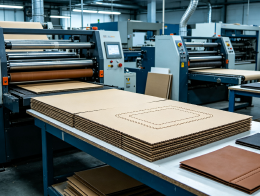 Production of two-piece packaging boxes for large household appliances with butt joint bonding.
 Pre-apply double-sided tape to the packaging of electronic products.
 Automatic Carton Forming Technology
 Double-sided tape applicator
Two-layer systems are designed for operational efficiency and ease of use. With automated synchronization and reduced ...
Each carton factory has different carton sizes, cardboard types, output capacity and workshop conditions. Please fill in the left form with your detailed production demands. Our technical team will tailor the most suitable machine configuration and professional production solution for you, providing free one-on-one technical guidance and customized support.