


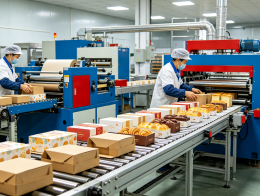
 Adapt to packaging factories and ecommerce supporting carton processing factories.
Corrugated box folder gluer machines combine high-speed transmission components, pneumatic cylinders, pressing rollers, and splicing mechanisms in a single production line, which means operator safety and equipment maintenance are not separate concerns but closely linked ones. How a machine is designed to sense, respond, and communicate its running condition has a direct effect on how much risk operators face during daily use, and on how predictable maintenance becomes over the equipment's service life.
Two recurring issues stand out when looking at how folder gluer equipment contributes to operator risk on the production floor.
The first is inadequate protection around sensing and actuation components. Photoelectric switches, pneumatic cylinders, and solenoid valves are responsible for detecting paper position and timing mechanical actions such as splicing or folding. When these components are sourced without consistent quality standards, or when their response precision is not tightly controlled, false triggers and delayed responses become more likely. In practical terms, this means an operator adjusting feed settings, clearing a paper jam, or making a mid-run correction is working alongside components that may not behave exactly as expected, which increases the chance of a hand or arm being caught by a moving part at the wrong moment.
The second issue is a reliance on operator experience rather than system feedback. Many traditional machines use simplified control panels that provide limited insight into running condition, fault status, or early wear signs. In this kind of setup, operators are largely left to judge whether something is wrong based on sound, vibration, or visible output quality, which means early indicators of component wear are easy to miss. By the time a problem becomes obvious enough to notice without instrumentation, it has often already progressed from a minor maintenance item into a safety concern or an unplanned production stoppage.
A related factor worth mentioning is the frequency of manual intervention required during changeover and fine adjustment. Machines without independently driven sections or precise adjustment mechanisms tend to require more hands-on involvement from operators to reposition guides, retest settings, or manually verify alignment. Each of these interventions is a point where the operator is working in closer proximity to moving components, so equipment that reduces the need for this kind of manual adjustment indirectly reduces operator exposure to risk as well.
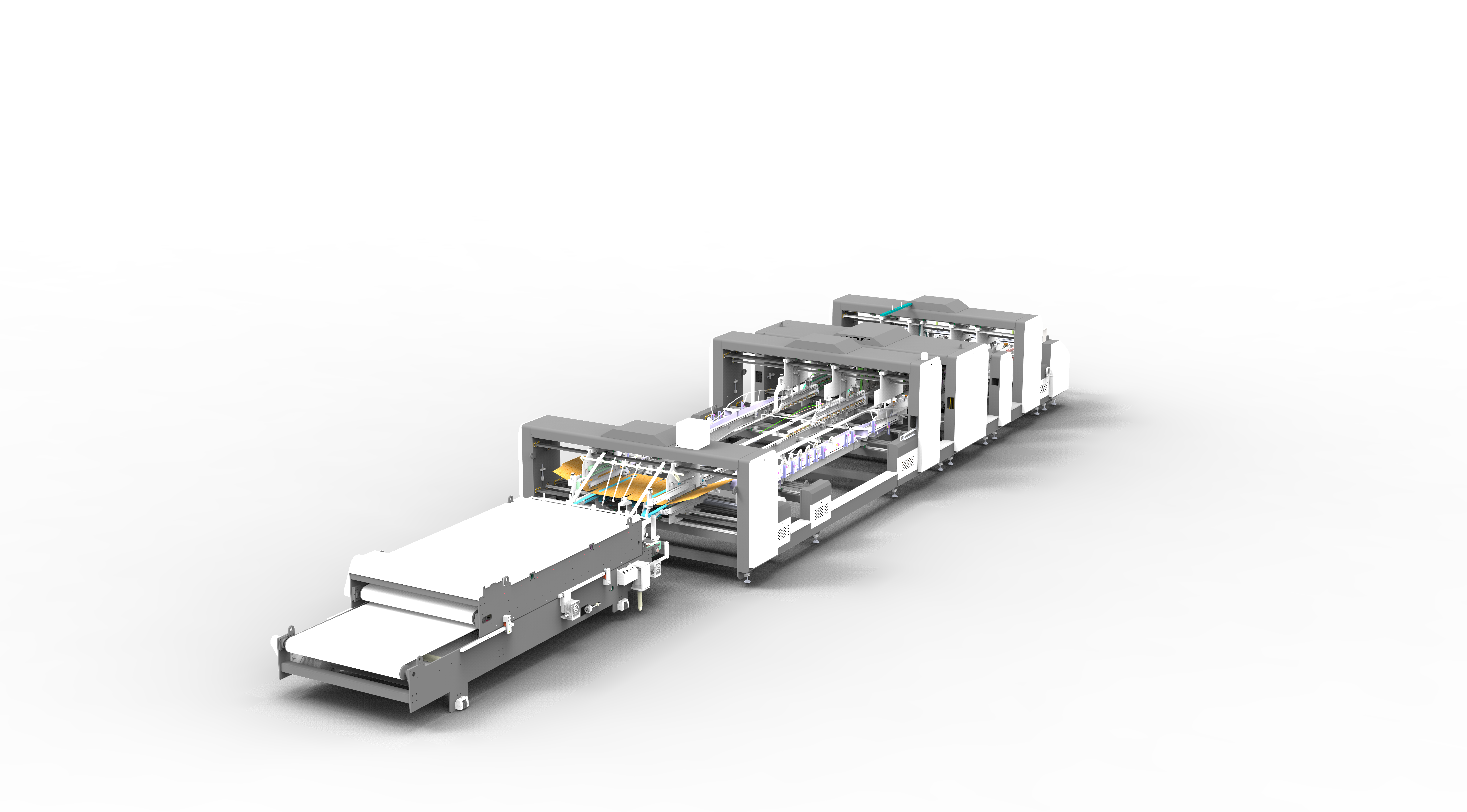
Improving operator safety works best when it starts with component selection and control system design, rather than relying on procedural reminders or protective signage layered on top of an otherwise unchanged machine. Two aspects of our equipment are particularly relevant here.
The first is our use of Schneider photoelectric switches paired with Taiwan AirTAC pneumatic cylinders and solenoid valves. These components are selected for their response precision, which allows the machine to detect paper position and splicing timing accurately and consistently. This precision matters directly for operator safety, because a sensing system that responds reliably reduces the number of false triggers or missed detections that would otherwise require an operator to step in and manually correct the process. Fewer manual interventions means fewer moments where hands or arms are near moving rollers, cylinders, or splicing mechanisms, which is a meaningful reduction in exposure over the course of a shift.
The second is our WECON human-machine interface, which gives operators real-time visibility into running parameters rather than requiring them to infer machine condition indirectly. Compared with a purely mechanical control panel, this kind of interface makes it possible to notice early signs of abnormal operation — a parameter drifting outside its normal range, for instance — well before that issue becomes visible as a mechanical symptom. This is paired with a Delta PLC and SINEE frequency converter, which allow running parameters to be set, recorded, and adjusted with precision. Together, these systems give maintenance staff a data-based reference point for daily inspection, rather than leaving equipment condition assessment entirely to individual judgment and experience.
These two systems are supported by a broader set of industrial-grade components, including Omron relays, Schneider contactors, and independently driven servo motors across key sections of the machine. None of these individually stands out as a dedicated safety feature, but collectively they contribute to a machine that behaves predictably run after run, which is itself a foundational safety characteristic — unpredictable equipment is far harder to operate and maintain safely, regardless of how careful an individual operator tries to be.
None of these design choices remove the need for trained operators, established safety procedures, or routine maintenance schedules — equipment design and operational discipline work together, not as substitutes for one another. What precise sensing components and visible running data do accomplish is a reduction in how often operators need to intervene manually during normal operation, and an improvement in how early a developing issue can be identified before it escalates.
This distinction matters in practice. A facility relying on operator experience alone to catch mechanical issues is depending on a process that varies from person to person and shift to shift. A facility supported by consistent sensing precision and visible parameter feedback has a more repeatable basis for both day-to-day operation and preventive maintenance planning, which tends to translate into fewer unplanned interruptions and a more consistent safety record over time — without suggesting that any machine can eliminate risk altogether.
Operator safety on a folder gluer line is shaped as much by component selection and control system design as it is by training and procedure. From the precision of our photoelectric switches and pneumatic components to the visibility provided by our WECON interface and PLC-based control system, our approach is to reduce the frequency and severity of situations where operators need to intervene manually near moving parts, and to give maintenance teams the running data needed to catch issues early. For packaging producers evaluating folder gluer equipment, these design details are worth examining closely, not just for their effect on output quality, but for what they mean for day-to-day operator safety and long-term maintenance planning. We work with businesses to configure machines that support safer, more predictable operation on the production floor, drawing on our experience in corrugated box folder gluer design and control system integration.
'%3e%3cg%20id='Group%201315'%3e%3cg%20id='Group'%20opacity='0.5'%3e%3cpath%20id='Vector'%20d='M387.997%200L232.635%20265.605L58.6579%2086.8843L285.379%200H387.997Z'%20fill='url(%23paint0_linear_821_1490)'/%3e%3c/g%3e%3cg%20id='Group_2'%20opacity='0.5'%3e%3cg%20id='Group%201314'%3e%3cpath%20id='Vector_2'%20d='M376.103%2012.2625L298.38%20330L10.1988%20240.481L298.38%2012.2625H376.103Z'%20fill='url(%23paint1_linear_821_1490)'/%3e%3c/g%3e%3c/g%3e%3c/g%3e%3c/g%3e%3c/g%3e%3cdefs%3e%3clinearGradient%20id='paint0_linear_821_1490'%20x1='319.349'%20y1='11.6627'%20x2='157.133'%20y2='145.876'%20gradientUnits='userSpaceOnUse'%3e%3cstop%20stop-color='%23D2DFFF'/%3e%3cstop%20offset='1'%20stop-color='%23D2DFFF'%20stop-opacity='0.01'/%3e%3c/linearGradient%3e%3clinearGradient%20id='paint1_linear_821_1490'%20x1='253.685'%20y1='25.1395'%20x2='74.5789'%20y2='173.327'%20gradientUnits='userSpaceOnUse'%3e%3cstop%20stop-color='%23D2DFFF'/%3e%3cstop%20offset='1'%20stop-color='%23D2DFFF'%20stop-opacity='0.01'/%3e%3c/linearGradient%3e%3c/defs%3e%3c/svg%3e)
'/%3e%3cpath%20id='Rectangle%20455'%20d='M0%2012H6L24%2056H0V12Z'%20fill='%23CE221D'/%3e%3c/g%3e%3cdefs%3e%3clinearGradient%20id='paint0_linear_769_2773'%20x1='0'%20y1='28'%20x2='432.5'%20y2='28'%20gradientUnits='userSpaceOnUse'%3e%3cstop%20stop-color='%23153B8A'/%3e%3cstop%20offset='1'%20stop-color='%23153B8A'%20stop-opacity='0'/%3e%3c/linearGradient%3e%3c/defs%3e%3c/svg%3e) Adapt to packaging factories and ecommerce supporting carton processing factories.
Adapt to packaging factories and ecommerce supporting carton processing factories.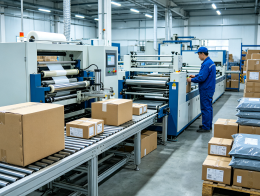 The printing and packaging factory produces molded paper boxes.
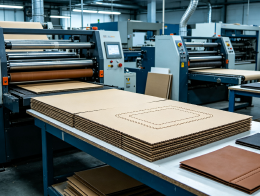 Production of two-piece packaging boxes for large household appliances with butt joint bonding.
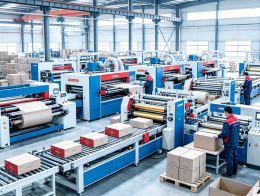 Pre-apply double-sided tape to the packaging of electronic products.
 Automatic Carton Forming Technology
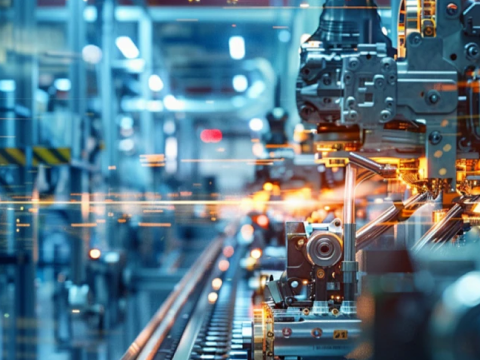 Double-sided tape applicator
Two-layer systems are designed for operational efficiency and ease of use. With automated synchronization and reduced ...
Each carton factory has different carton sizes, cardboard types, output capacity and workshop conditions. Please fill in the left form with your detailed production demands. Our technical team will tailor the most suitable machine configuration and professional production solution for you, providing free one-on-one technical guidance and customized support.