


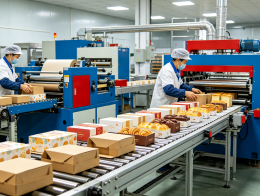
 Adapt to packaging factories and ecommerce supporting carton processing factories.
Poor gluing performance is one of the most persistent headaches on a corrugated box production line. Open glue joints, delamination, and misaligned splices don't just slow down output — they lead to returned batches, compression test failures, and customers who start asking hard questions about quality control. In most cases, the root cause traces back to two specific stations on the corrugated box folder gluer machine: the gluing section and the splicing section. Getting these two right solves the majority of gluing problems before they ever reach the finished carton.
Operators often treat gluing failures as a maintenance issue — clean the nozzle, top up the glue, move on. That approach works for a day or two, but the underlying causes are usually mechanical, not just a matter of housekeeping.
The first issue sits at the gluing station itself. Many folder gluer machines apply adhesive using a single method, typically cold glue only or hot melt only. A single-method system works fine for one type of board and one production speed, but corrugated plants rarely run identical materials all year. When board weight, liner type, or ambient temperature shifts, a fixed gluing method struggles to keep up, and bond strength becomes inconsistent from batch to batch.
The second issue is subtler and easy to miss during a routine inspection: the lack of secondary positioning after glue is applied. Adhesive can be applied correctly and still fail to bond well if the panel shifts even slightly before the flaps come together. Without a mechanism to hold the panel's position through that transition, the glue line and the fold line drift apart, and the joint never gets the contact pressure it needs.
The third contributor is at the splicing section, further down the line. Splicing relies on guide belts and rail alignment to bring panels together at the correct point. Over time, mechanical guide components wear, and without a feedback system to detect drift, the splice point gradually shifts. At that stage, even a well-applied bead of glue won't produce a strong joint, because the panels are no longer meeting where they should.
It's worth noting that upstream stations — feeding, folding, and squaring — also affect the final result, since any inconsistency introduced early in the process gets carried forward into the gluing and splicing stages. But the direct, most common causes of poor gluing performance are concentrated in those two stations, which is why they deserve closer attention.
Rather than locking a machine into a single fixed process, we design the gluing station on our corrugated box folder gluer machines to handle variation as a matter of course. Mechanical roller gluing that supports both hot and cold dipping methods allows the same machine to adapt to different board types and adhesive requirements without a full changeover — so plants running mixed orders, some jobs suited to cold glue and others requiring hot melt for faster set times, don't have to standardize on one method and accept its limitations across every job.
We address panel drift after glue application with a dedicated secondary positioning system built into the gluing unit. Rather than relying on gravity or momentum to hold the panel in place through the critical moment when the flaps close, this system actively maintains its position, keeping the glue line and fold line aligned. For customers who need additional flexibility, we also offer an optional spray gluing configuration that extends the range of materials and adhesive patterns the machine can handle.
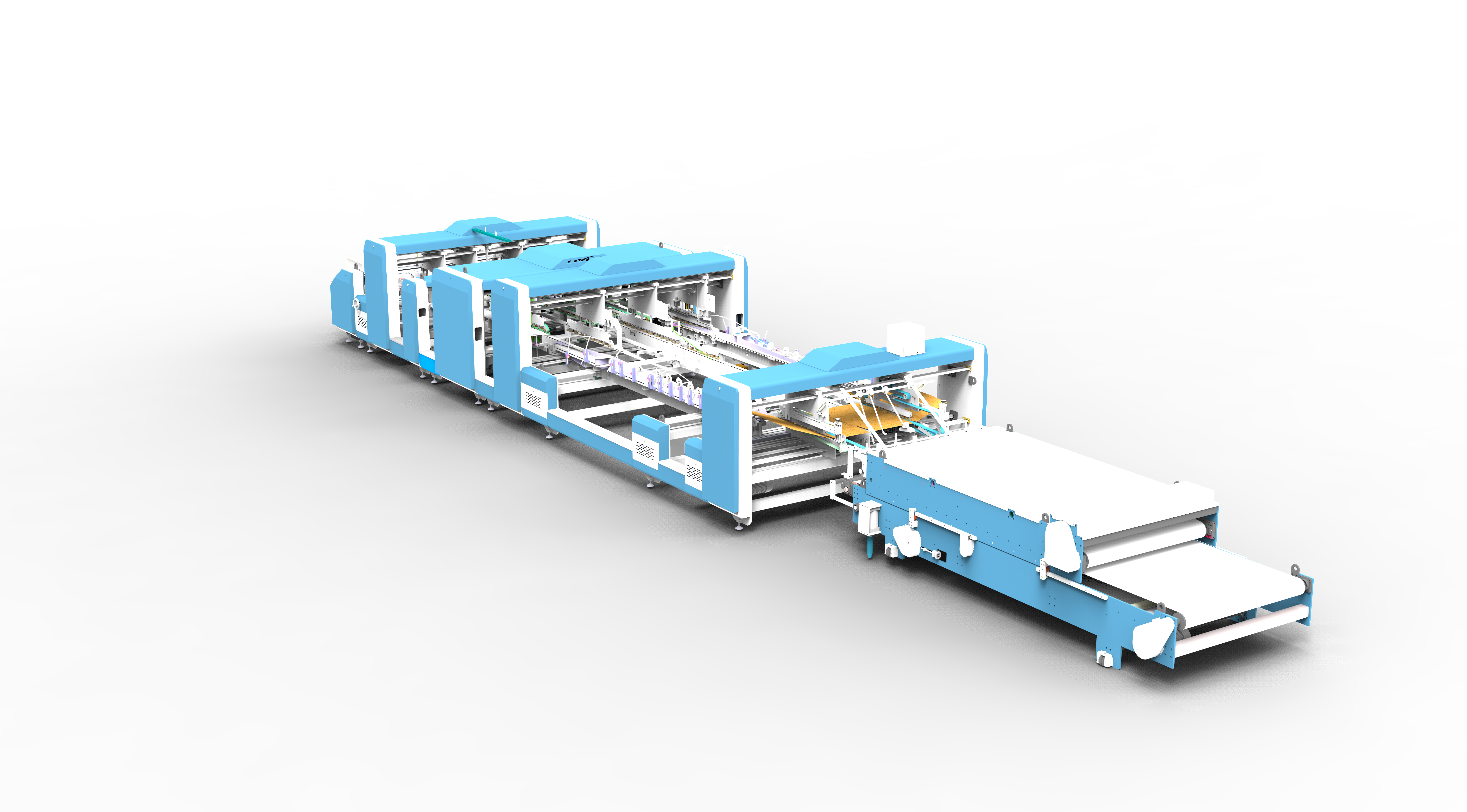
At the splicing station, precision comes down to how well the guide system tracks and corrects for movement over time. A four-large, one-small guide belt layout, with each large belt driven by a dual-screw and motor-adjusted configuration, gives operators finer control over splice alignment than a single fixed guide rail. Because the adjustment is motor-driven rather than manual, it can be repeated accurately across production runs — an important detail for plants running the same box style over multiple shifts, since it reduces the setup drift that tends to creep in with manual guide adjustment.
The splicing joint itself also benefits from a dual hot-and-cold bonding option, which allows the splice to be reinforced according to the material and production speed in use. To keep the splice point accurate as production continues, a photoelectric sensing device paired with servo motor control monitors alignment and adjusts the splicing position in real time, rather than depending solely on mechanical wear tolerance. This kind of feedback loop is what keeps splice accuracy from degrading gradually over the life of the machine, which is the failure mode that manual-only systems are most prone to.
While gluing and splicing are where most bonding failures surface, the stations before them set the conditions for success. Independent servo-driven feeding with adjustable side guides reduces double-sheet and empty-sheet feeding errors. Independently driven folding sections help ensure the second and fourth fold lines land accurately before the panel ever reaches the glue roller. And a squaring section with independently adjustable upper and lower pallets keeps panel positioning consistent across different box lengths. None of these stations glue anything directly, but a panel that arrives at the gluing station already misaligned makes even a well-designed gluing system work harder than it should.
Precision at the gluing and splicing stations depends as much on the drive components behind them as on the mechanical layout. Servo motors from established manufacturers such as Delta provide the repeatable positioning that secondary gluing and splice adjustment rely on, while photoelectric sensors from brands like Schneider support the feedback accuracy needed for real-time splice correction. Using recognized industrial components in these positions is less about branding and more about ensuring that replacement parts and technical support remain available over the working life of the machine — a practical consideration for any plant planning for long-term uptime.
Poor gluing performance is rarely caused by one single fault. It's usually the combined result of a gluing station that can't adapt to varying materials, a splicing section that drifts out of alignment over time, and upstream stations that don't hand off a properly positioned panel. Addressing the gluing and splicing stations specifically — with adaptable gluing methods, active secondary positioning, and sensor-corrected splicing — resolves the majority of these cases at the source rather than through repeated troubleshooting.
As a manufacturer of corrugated box folder gluer machines, we design our gluing and splicing stations around exactly these failure points, drawing on feedback from production lines running a wide range of board types and box styles. If your current line is dealing with inconsistent bonding or splice alignment issues, our technical team can walk through your specific production requirements and recommend a folder gluer configuration suited to your board range and output targets.
'%3e%3cg%20id='Group%201315'%3e%3cg%20id='Group'%20opacity='0.5'%3e%3cpath%20id='Vector'%20d='M387.997%200L232.635%20265.605L58.6579%2086.8843L285.379%200H387.997Z'%20fill='url(%23paint0_linear_821_1490)'/%3e%3c/g%3e%3cg%20id='Group_2'%20opacity='0.5'%3e%3cg%20id='Group%201314'%3e%3cpath%20id='Vector_2'%20d='M376.103%2012.2625L298.38%20330L10.1988%20240.481L298.38%2012.2625H376.103Z'%20fill='url(%23paint1_linear_821_1490)'/%3e%3c/g%3e%3c/g%3e%3c/g%3e%3c/g%3e%3c/g%3e%3cdefs%3e%3clinearGradient%20id='paint0_linear_821_1490'%20x1='319.349'%20y1='11.6627'%20x2='157.133'%20y2='145.876'%20gradientUnits='userSpaceOnUse'%3e%3cstop%20stop-color='%23D2DFFF'/%3e%3cstop%20offset='1'%20stop-color='%23D2DFFF'%20stop-opacity='0.01'/%3e%3c/linearGradient%3e%3clinearGradient%20id='paint1_linear_821_1490'%20x1='253.685'%20y1='25.1395'%20x2='74.5789'%20y2='173.327'%20gradientUnits='userSpaceOnUse'%3e%3cstop%20stop-color='%23D2DFFF'/%3e%3cstop%20offset='1'%20stop-color='%23D2DFFF'%20stop-opacity='0.01'/%3e%3c/linearGradient%3e%3c/defs%3e%3c/svg%3e)
'/%3e%3cpath%20id='Rectangle%20455'%20d='M0%2012H6L24%2056H0V12Z'%20fill='%23CE221D'/%3e%3c/g%3e%3cdefs%3e%3clinearGradient%20id='paint0_linear_769_2773'%20x1='0'%20y1='28'%20x2='432.5'%20y2='28'%20gradientUnits='userSpaceOnUse'%3e%3cstop%20stop-color='%23153B8A'/%3e%3cstop%20offset='1'%20stop-color='%23153B8A'%20stop-opacity='0'/%3e%3c/linearGradient%3e%3c/defs%3e%3c/svg%3e) Adapt to packaging factories and ecommerce supporting carton processing factories.
Adapt to packaging factories and ecommerce supporting carton processing factories.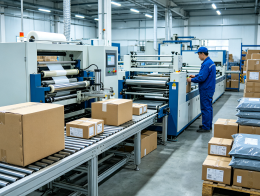 The printing and packaging factory produces molded paper boxes.
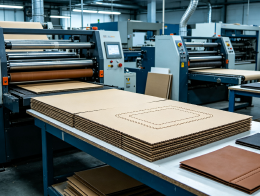 Production of two-piece packaging boxes for large household appliances with butt joint bonding.
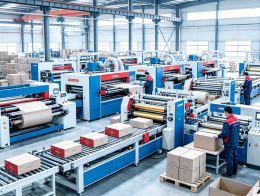 Pre-apply double-sided tape to the packaging of electronic products.
 Automatic Carton Forming Technology
 Double-sided tape applicator
Two-layer systems are designed for operational efficiency and ease of use. With automated synchronization and reduced ...
Each carton factory has different carton sizes, cardboard types, output capacity and workshop conditions. Please fill in the left form with your detailed production demands. Our technical team will tailor the most suitable machine configuration and professional production solution for you, providing free one-on-one technical guidance and customized support.