


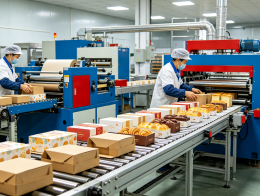
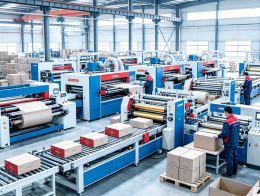
 Adapt to packaging factories and ecommerce supporting carton processing factories.
Driven by e-commerce, the corrugated packaging market requires high-mix, low-volume production, making throughput and downtime critical to profitability. Legacy chain-driven equipment struggles with these demands, prompting a shift to digital manufacturing. The 6-Servo Independent Drive Corrugated Box Folder Gluer Machine replaces mechanical components with multi-axis control, enabling rapid changeovers and high accuracy for profitable short-run jobs.
The core mechanical limitation of a traditional corrugated box folder gluer lies in its drive architecture. These machines rely on a single asynchronous AC motor paired with a massive, interconnected web of mechanical transmission components including drive chains, link belts, bevel gears, spur gears, universal joints, and long spline shafts.
Because a single power source moves every section simultaneously, any mechanical variance in one part of the machine impacts the entire system. Over months of heavy-duty operation, drive chains inevitably stretch due to continuous mechanical stress and thermal expansion.
This physical deformation introduces mechanical backlash and timing errors into the production line. As a corrugated blank travels down the folder gluer, even a microscopic delay in power transmission causes the board to twist. This structural variance leads to the dreaded "fishtailing" defect (or "scissors cut"), where the folded panels fail to align square. The result is a high volume of unscheduled material waste, structural failure in downstream automatic case packers, and costly customer rejections.
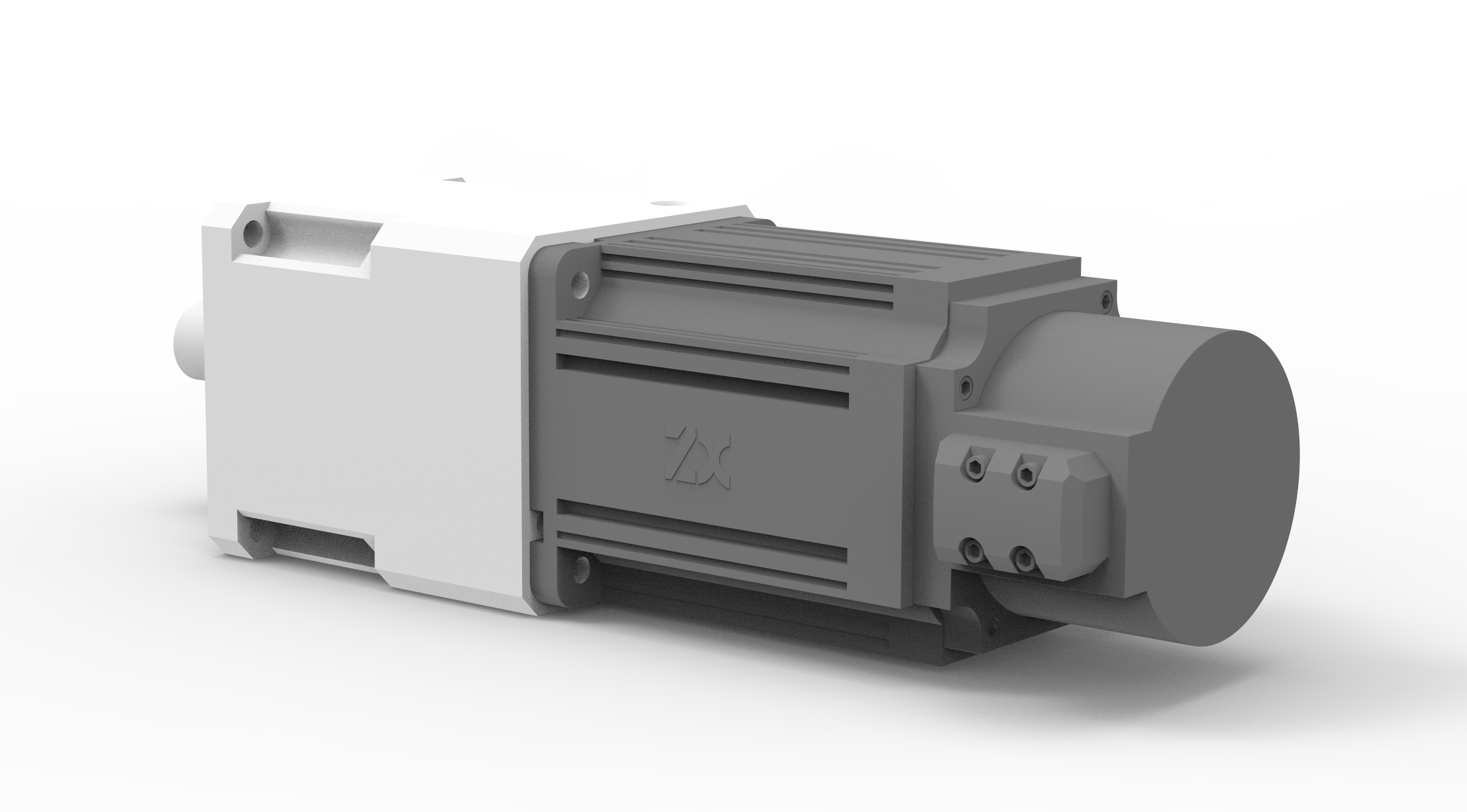
Our advanced corrugated box folder gluer machine significantly reduces the limitations of traditional mechanical transmission systems by adopting an innovative 6-Servo Independent Drive System. Compared with conventional chain-driven designs, the machine replaces centralized transmission components with independently controlled servo-driven modules, improving synchronization accuracy and operational flexibility.
Instead, the machine is split into independent operational modules, with each critical zone powered by its own dedicated permanent magnet synchronous servo motor. This includes the feeding section for precise, high-speed sheet separation, the alignment or register section to eliminate blank skewing prior to creasing, the left folding component to control precise lateral folding vectors, the right folding component to independently handle parallel panel closure, the trombone or conveyor section to maintain constant grip and control panel transition, and finally the delivery or squaring section to apply electronic counting and compression forces.
With traditional chain-driven folder gluers, switching production between different box footprints or altering flute specifications (such as moving from thick A-flute to ultra-thin E-flute corrugated board) is a highly inefficient, labor-intensive process.
Operators must stop production and use manual hand tools to configure the machine. The changeover routine requires manually loosening and retightening heavy chain tensioners, physically winding handcranks to reposition mechanical guide rails, manually calibrating mechanical limit stops and glue wheel gaps, and conducting multiple slow-speed test runs to check box squaring.
This manual process typically drains anywhere from 30 to 60 minutes per order changeover. In a modern factory environment handling multiple short-run orders per shift, this downtime acts as a direct drain on total plant ROI. Operators spend more time setting up machinery than actually running live production.
Our 6-servo driven machine introduces automated digital tuning and computerized order storage. The machine features a high-definition, industrial HMI (Human-Machine Interface) touchscreen tied directly to the central motion controller's memory database.
The system can store hundred of unique product recipes. When an operator needs to switch jobs, they simply select the stored order profile or enter the new box dimensions (length, width, height, and flute thickness) directly into the touchscreen panel.
Once the operator confirms the new dimensions, the 6 independent servo motors execute a coordinated positioning sequence. Using high-precision ball screws and linear guide tracks, the servos automatically move the entire machine framework, guide rails, folding belts, and gluing assemblies into position within seconds.
The automated positioning process can be completed within two minutes, significantly reducing overall changeover time. By converting non-productive setup windows into high-speed runtime, the 6-servo machine makes short-run, low-volume packaging orders highly profitable for the plant.
Traditional asynchronous AC motors offer limited speed-regulation flexibility. They are designed to operate optimally at a specific, constant speed. When a machine operator needs to ramp production up or slow it down to match upstream printing presses or downstream palletizing workflows, the entire mechanical system undergoes severe kinetic stress.
Because all sections are linked mechanically, any sudden acceleration or deceleration creates inertial lag across the drive chains. The proportional tension between the feeding, folding, and delivery belts fluctuates sharply. These velocity variations cause corrugated blanks to slip or misalign mid-transit, create severe material jam-ups inside the folding channel, lead to inconsistent glue application, and produce excessive material waste during the startup and slowdown phases.
Multi-servo integration solves this problem by enabling smart dynamic speed matching. Our machine's central control system tracks production flow in real time. As the operator adjusts the primary feed rate, or as automated sensors detect changes in upstream volume, the folder gluer executes a smooth acceleration or deceleration curve.
Throughout these speed transitions, the 6 independent axes maintain absolute, proportional speed synchronization via their electronic gear ratios. The system continuously adjusts torque profiles to compensate for changing inertial loads. This ensures that the exact compression forces, belt tensions, and folding pressures remain perfectly stable across all sections, whether the machine is idling at 20 meters per minute or running at full production capacity.
This operational flexibility allows modern box plants to expand their product catalog. The machine easily processes everything from delicate micro-flute packaging to complex, heavy-duty double-wall (BC-flute or AA-flute) industrial shipping containers. The independent servos provide the precise torque control required to fold rigid, heavy board scores cleanly without cracking the outer liners, significantly reducing startup waste..
Comparing these two engineering architectures highlights the advantages of servo-driven folder gluers over traditional chain-driven systems. Modern machines use six independent synchronous servo motors to control key operating sections, while conventional models rely on a centralized asynchronous AC motor with mechanical transmission components such as chains and gears.
This advanced motion control allows operators to complete adjustments digitally through an HMI touchscreen, while traditional machines require more manual setup using hand tools. As a result, servo-driven systems significantly reduce changeover time and improve efficiency for high-mix, short-run carton production.
In terms of maintenance and accuracy, servo systems minimize mechanical wear caused by traditional chain transmission and provide more stable synchronization between working sections. Compared with conventional designs that may experience chain elongation and alignment variation over time, servo-controlled motion improves carton squaring accuracy and reduces issues such as fishtailing and sheet misalignment.
Investing in a 6-servo corrugated box folder gluer machine is more than just a basic equipment upgrade. It represents a vital strategic pivot toward smart, automated digital manufacturing.
As the packaging market continues to reward operational agility, short lead times, and structural precision, relying on traditional chain-driven machinery introduces clear financial risks. The prolonged setup windows, high maintenance costs, and frequent quality variations common to legacy systems directly hurt a plant's ability to win high-margin contracts.
By reducing mechanical limitations and replacing traditional chain-driven synchronization with electronic motion control, our 6-servo machine provides predictable high-speed output, minimal unscheduled downtime, and the flexibility to handle complex packaging designs for the next decade. Upgrading your finishing department with this technology optimizes your workflow, protects your profit margins, and secures a lasting competitive edge in the industrial packaging marketplace.
'%3e%3cg%20id='Group%201315'%3e%3cg%20id='Group'%20opacity='0.5'%3e%3cpath%20id='Vector'%20d='M387.997%200L232.635%20265.605L58.6579%2086.8843L285.379%200H387.997Z'%20fill='url(%23paint0_linear_821_1490)'/%3e%3c/g%3e%3cg%20id='Group_2'%20opacity='0.5'%3e%3cg%20id='Group%201314'%3e%3cpath%20id='Vector_2'%20d='M376.103%2012.2625L298.38%20330L10.1988%20240.481L298.38%2012.2625H376.103Z'%20fill='url(%23paint1_linear_821_1490)'/%3e%3c/g%3e%3c/g%3e%3c/g%3e%3c/g%3e%3c/g%3e%3cdefs%3e%3clinearGradient%20id='paint0_linear_821_1490'%20x1='319.349'%20y1='11.6627'%20x2='157.133'%20y2='145.876'%20gradientUnits='userSpaceOnUse'%3e%3cstop%20stop-color='%23D2DFFF'/%3e%3cstop%20offset='1'%20stop-color='%23D2DFFF'%20stop-opacity='0.01'/%3e%3c/linearGradient%3e%3clinearGradient%20id='paint1_linear_821_1490'%20x1='253.685'%20y1='25.1395'%20x2='74.5789'%20y2='173.327'%20gradientUnits='userSpaceOnUse'%3e%3cstop%20stop-color='%23D2DFFF'/%3e%3cstop%20offset='1'%20stop-color='%23D2DFFF'%20stop-opacity='0.01'/%3e%3c/linearGradient%3e%3c/defs%3e%3c/svg%3e)
'/%3e%3cpath%20id='Rectangle%20455'%20d='M0%2012H6L24%2056H0V12Z'%20fill='%23CE221D'/%3e%3c/g%3e%3cdefs%3e%3clinearGradient%20id='paint0_linear_769_2773'%20x1='0'%20y1='28'%20x2='432.5'%20y2='28'%20gradientUnits='userSpaceOnUse'%3e%3cstop%20stop-color='%23153B8A'/%3e%3cstop%20offset='1'%20stop-color='%23153B8A'%20stop-opacity='0'/%3e%3c/linearGradient%3e%3c/defs%3e%3c/svg%3e) Adapt to packaging factories and ecommerce supporting carton processing factories.
Adapt to packaging factories and ecommerce supporting carton processing factories.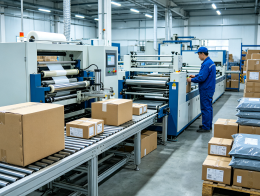 The printing and packaging factory produces molded paper boxes.
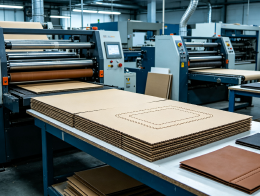 Production of two-piece packaging boxes for large household appliances with butt joint bonding.
 Pre-apply double-sided tape to the packaging of electronic products.
 Automatic Carton Forming Technology
 Double-sided tape applicator
Two-layer systems are designed for operational efficiency and ease of use. With automated synchronization and reduced ...
Each carton factory has different carton sizes, cardboard types, output capacity and workshop conditions. Please fill in the left form with your detailed production demands. Our technical team will tailor the most suitable machine configuration and professional production solution for you, providing free one-on-one technical guidance and customized support.